

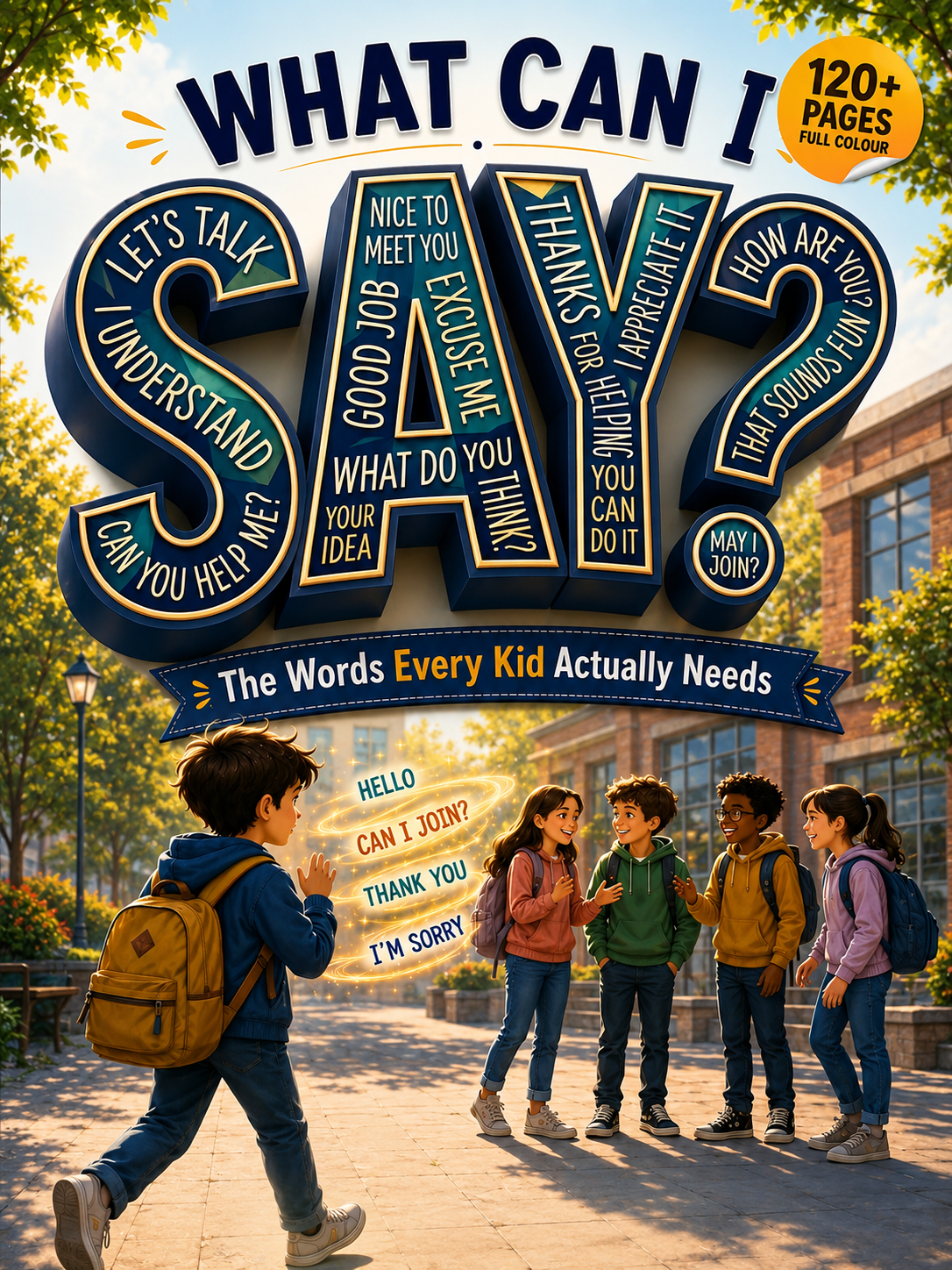

Designed to Grow With Them 🌱
The same everyday skill is introduced in age-appropriate ways, so kids can learn at a level that feels natural to them.
🌱 Seed • Ages 6–8
Simple words and everyday situations.
🌿 Sprout • Ages 8–10
Build confidence and stronger communication.
🌳 Tree • Ages 10–12
Navigate more complex conversations, feelings, and friendships.
One book. Different stages. Skills that grow with them.
Chapter 1 - Everyday Interactions
-

When Everyday Moments Feel Hard
Some kids know what they want to say but struggle to find the right words — making everyday interactions feel uncomfortable or overwhelming.
-

Build Confidence for Everyday Life ✨
With simple guidance and practice, kids learn to speak up, connect with others, ask for help, and express themselves with confidence.
-

Everyday Interactions Made Easier
From saying hello to joining a conversation, kids learn simple, practical ways to handle everyday social situations with more confidence.
-

What to Say — Without the Guesswork
Simple, age-appropriate examples show kids exactly what they can say — helping them start conversations, respond naturally, and feel more confident in everyday moments.


Chapter 2 - Conversation SKills
-

When Kids Struggle to Speak Up
Some kids have plenty to say but struggle to express themselves, join conversations, or feel heard around others.
-

Build Confidence in Communication ✨
Kids learn to express their ideas clearly, join conversations naturally, and connect with others with greater confidence.
-

Help kids learn what to say after “hello.”
Simple, practical examples teach them how to ask questions, respond naturally, and keep conversations flowing with confidence.
-

Keep the Conversation Flowing 💬
Kids learn simple ways to ask follow-up questions, stay engaged, and avoid awkward silences — making everyday conversations feel easier and more natural.


Chapter 3 - Getting Along
-

When Disagreements Turn Into Arguments
Kids may struggle to stay calm, listen to others, or express themselves respectfully when they don’t agree.
-

Learn to Handle Disagreements Better 🤝
Kids learn to listen, communicate respectfully, take responsibility, and work together to solve problems.
-

When You Both Want Different Things
Kids learn that disagreements don’t need to become arguments. They discover how to listen, stay calm, and find a solution that works for both sides.
-

Learn to Meet in the Middle 🤝
Practical, age-friendly examples teach kids how to compromise, express what matters, and find fair solutions where everyone feels heard.


Chapter 4 - Hard Feelings
-

When Big Feelings Feel Overwhelming
Kids may struggle to understand their emotions, calm down, or know what to do when they feel hurt, angry, or frustrated.
-

Learn Healthy Ways to Handle Emotions 💜
Kids learn to name their feelings, calm themselves, ask for help, and express emotions in healthier ways.
-

Forgiveness Doesn’t Mean Forgetting 💜
Kids learn that forgiving someone doesn’t mean what happened was okay. It means understanding their feelings, letting go of the hurt, and choosing how to move forward.
-

Learn What to Say When You’re Still Hurt
Age-friendly examples give kids the actual words to express hurt, set boundaries, and move forward without pretending everything is okay.


Chapter 5 - Friendship
-

When Making Friends Feels Hard
Kids may struggle to join in, speak up, handle disagreements, or know how to connect with other children.
-

Build Stronger, Healthier Friendships 💗
Kids learn to include others, communicate kindly, solve problems together, and build friendships based on trust and respect.
-

Making a New Friend Starts With One Hello 👋
Kids learn that friendships often begin with one small step — saying hello, starting a conversation, and having the confidence to reach out first.
-

Learn What to Say to Make a New Friend 💗
Simple, age-friendly examples give kids the actual words to introduce themselves, find common interests, and turn a first conversation into a new friendship.


Chapter 6 - Family & Home
-

Build Stronger Family Connections 🏡
Kids learn how listening, kindness, helping one another, and solving problems calmly can create stronger and happier family relationships.
-

Recognize Habits That Push Families Apart
Kids learn how ignoring others, hurtful words, constant arguments, and avoiding problems can weaken trust and make communication harder.
-

Talking About Hard Things Can Feel Scary 💚
Kids learn that they don’t have to keep difficult feelings to themselves. They can open up, ask for help, and talk to a parent when something is bothering them.
-

Learn How to Start the Conversation 💬
Age-friendly examples give kids the actual words to begin difficult conversations, explain how they feel, and ask for support with confidence.


Why "What Can I Say?" Actually Works
Not all social skills advice is created equal.
Keep Their Curiosity Growing ✨
-

The Secret Playbook of Life Lessons
For Everyday Life 💬
Build confidence, understand emotions, and handle everyday social situations. -

Why Do We...?
For Curious Kids 🧠
Fun answers to the questions kids are always asking about their body, mind, and world. -

Science for Kids
For Young Scientists 🔬
Explore exciting science, ask questions, and discover how the world works. -

Physics in a Minute
Big Ideas Made Simple 🚀
Discover gravity, light, sound, motion, space, and more in easy-to-understand lessons.


